

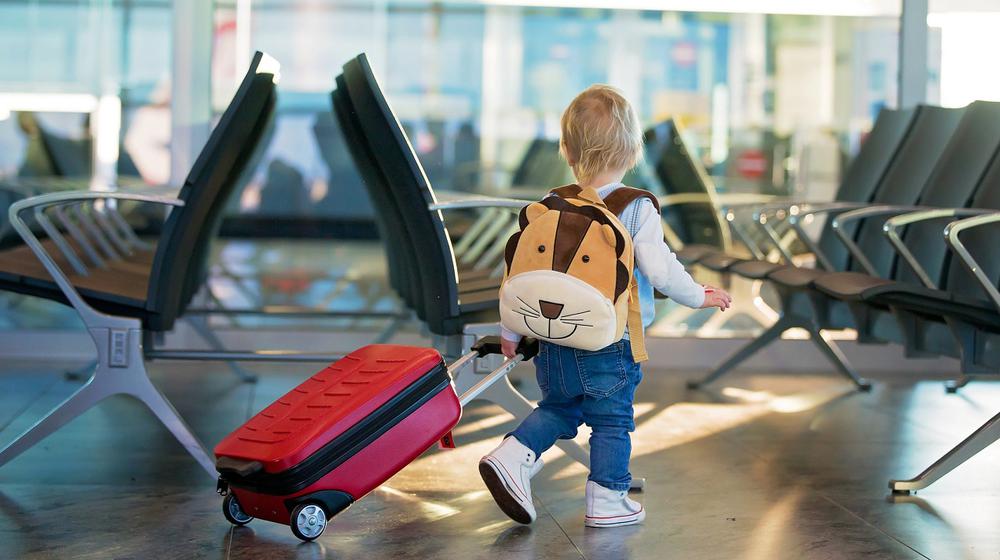
Nowadays, traveling with kids is easier than ever—even to faraway vacation destinations. But parents of newborns or small children often have many questions when planning to fly with their child:
- When can a baby start flying?
- Is flying harmful for babies?
- What documents are required?
- Do I need to book a separate seat for my child?
- Can I bring baby food in my carry-on luggage?
This guide answers your questions.
From what age can a baby fly?
The airline determines the minimum age at which babies are allowed to fly. You can find this information on your airline’s website. Generally, your baby must be older than 48 hours. If your baby is younger than one week, you’ll need a medical certificate. Many airlines allow babies on board from the age of 1 to 2 weeks. However, pediatricians recommend waiting until the baby is at least 6 weeks old.
Is flying dangerous for babies?
Parents should consider whether a flight is truly necessary for their baby. Newborns under 6 weeks should generally not fly, as their lungs are not yet fully developed. The lower oxygen saturation in the cabin at high altitudes can cause problems.
Flying can also be stressful for babies and toddlers due to fluctuations in oxygen levels, unfamiliar noises, and changing pressure conditions in the aircraft.
However, increased radiation exposure is not a concern. This exposure is harmless for both babies and adults who fly infrequently.
If you're unsure whether flying is safe for your baby, consult your pediatrician for personalized advice.
Pressure conditions during the flight
During a flight, cabin pressure changes rapidly, especially during takeoff and landing. Since babies’ sinuses are not fully developed, they cannot equalize pressure on their own, which can lead to ear pain.
To prevent ear pain, let your child suck, chew, or swallow during takeoff and landing. Give your baby a pacifier, toddlers something to drink or eat. Older children can use chewing gum or candy. For children over 1 year old, special earplugs can help equalize pressure slowly. These earplugs are available at pharmacies.
Tip: Landing can be particularly uncomfortable for small children. Make sure your child is awake during takeoff and landing, and start pressure equalization about 20 minutes before landing.
Note: If your child has a cold, pressure equalization may be difficult. In this case, a nasal spray or drops can help. If your child has a severe cold and fever, ask your pediatrician whether your child is fit to fly. If your child has an ear infection, we advise against flying!
Risks at the travel destination
Planning a trip to a tropical country? Keep in mind that unfamiliar conditions such as tropical climate and unknown baby food can cause health issues and stress for your baby. Also check the recommended vaccinations for your destination. Some countries recommend or even require specific vaccinations.
How long should a flight with a baby last at most?
There is no officially defined maximum flight duration for babies. As parents, you know your child best. Ask yourself the following questions and consult your pediatrician if in doubt:
- How well does my baby handle stress?
- How long can my baby tolerate limited space and little movement?
Tip: Choose a nonstop flight over one with a layover. A longer flight causes less stress for your baby than a transfer with repeated takeoff and landing. For long-haul flights, opt for a night flight to avoid disrupting your baby’s sleep rhythm and to arrive more relaxed.
How much does a flight cost for a baby or toddler?
The cost of flight tickets for babies or toddlers depends on their age. Children under 2 years do not need their own seat and can sit on a parent’s lap during the flight. You usually pay only a small surcharge for this. If you reserve a separate seat for your child under 2, you typically pay 75% to 100% of the adult fare. Children over 2 years must have their own seat.
Good to know: Families with children usually have priority boarding, meaning they can board before other passengers. So flying with children has its perks!
How can a baby travel safely on a plane?
If your baby sits on your lap during the flight, they must be secured with a lap belt that attaches to your own seatbelt. However, the safety of such lap belts is debated. It is safer and more comfortable for your baby to have their own seat, for example in an infant carrier or child car seat. Make sure your carrier or car seat is approved for use on aircraft, indicated by the label “For use in Aircraft.”
If you're traveling with your family, reserve your seats early to get a wider selection and your preferred spot. We recommend seats with extra legroom, usually located at bulkheads or emergency exits.
Planning a long-haul flight?
Then consider renting a baby bassinet. These bassinets are attached to the bulkhead and are often approved for babies up to 10 months old. Reserve the bassinet and the associated seats early with your airline.
How much luggage can a child take?
The amount of luggage allowed for a child is determined by the airline. Check in advance for the number, dimensions, and weight of permitted luggage. In most cases, children are allowed the same luggage allowance as adults, even if they don’t have their own seat. If your child is over 2 years old and must have their own seat, they are entitled to the same luggage allowance as adults. Good to know: On budget flights, luggage usually needs to be booked and paid for separately—for both adults and babies.
Can you bring a stroller or buggy on the plane?
Most airlines allow you to bring a foldable buggy or stroller free of charge. Ask at check-in whether you can use the stroller up to departure. Usually, you can use it until the gate, where airline staff will take and store it. After landing, you’ll get it back at the gate. In some cases, small foldable strollers or buggies may even be brought into the cabin free of charge.
Is there priority boarding for families with small children?
Many airlines offer priority boarding for families with children under 6 years old. This means you board first and don’t have to wait in long lines. Check with your airline to see if this option is available.
What should you pack for a flight with a baby or child?
Have you thought of everything? Our checklist will help you start your flight with a baby or toddler stress-free:
- Passport / ID card: Make sure all required identification documents are available. Check the entry requirements of your destination (or transit) country early. Note that babies’ and toddlers’ faces change quickly, which can make identification difficult. Apply for new documents in good time.
- Visa: Check the visa requirements of your destination. Travel or visa documents must be valid for at least six months upon entry.
- Travel authorization: If your child is traveling with an adult who does not have custody, that person must carry a travel authorization.
- Baby food: Milk, baby food, and bottles are not subject to strict carry-on security regulations. However, you may only bring the amount needed during the flight. Ask your airline whether you can pre-order baby food or meals and whether brought food can be heated on board. Always pack a few favorite snacks.
- Infant carrier, car seat, stroller, buggy
- Changing supplies: Pack a changing mat, wet wipes, diapers, diaper bags, creams, and a change of clothes. Bring enough supplies for two days to be prepared for diarrhea or flight delays. Most airplanes have changing tables in the restrooms.
- Clothing: Dress your child in loose and comfortable clothes. Bring an extra jacket or sweater in case it gets cold on the plane, and an extra blanket for your baby.
- Toys and pacifier: Picture books, stuffed animals, and other toys help pass the time, especially on long flights. A pacifier helps with pressure equalization.
- First-aid kit: Bring all medications you would use at home. Make sure you have pain and fever medication. Nasal drops or earplugs can help your child equalize pressure. Observe the regulations for medications in checked luggage.