

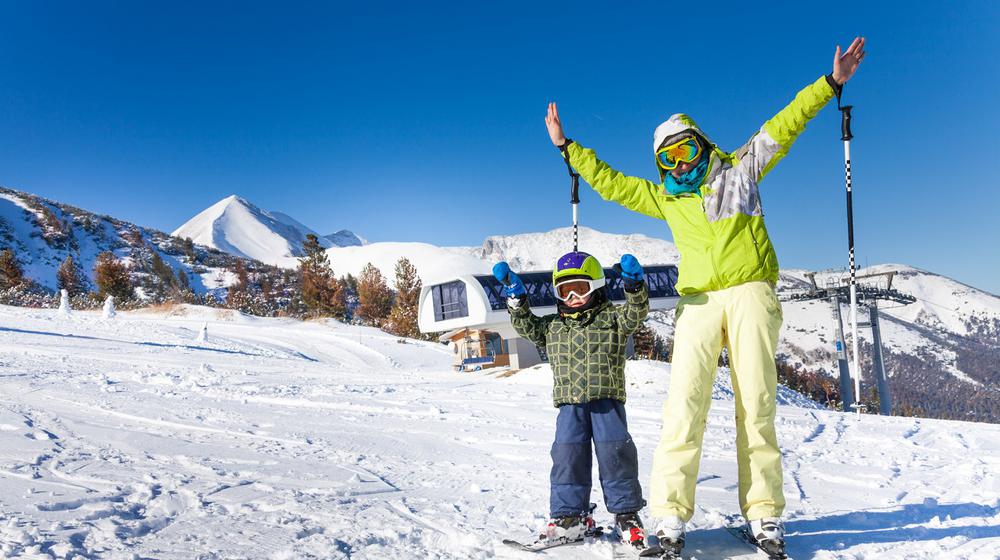
A ski holiday offers the perfect opportunity to experience winter at its most beautiful – while staying active. Breathtaking mountain landscapes, athletic challenges on the slopes, relaxing in luxurious hotels or chalets with family or friends. The ideal ski holiday combines adventure with comfort and special moments in nature. Prepare yourself optimally:
- Where is the best ski region? World-famous ski resorts like St. Moritz, Sölden, Ischgl and Aspen offer perfect slopes. But Japan also has a lot to offer for a winter holiday.
- Which accommodations offer the most comfort? Choose between stylish luxury hotels and private chalets.
- Ski holiday with children: Insider tips for a perfect family vacation.
- How to best prepare for a ski holiday? Training is key.
- Safety on the slopes: Rules of conduct, emergency numbers, travel insurance and avalanche danger scale.
- What should definitely go in your suitcase for a ski holiday? In addition to weatherproof clothing, ski equipment, snowboard gear, sun protection and safety gear like helmets and protectors are essential.
Where to go for a ski holiday?
Want to book a ski holiday? Europe and other countries around the world offer many great destinations.
In Europe, the Alps with ski resorts in Austria, Switzerland, France and Italy are especially popular. Austria stands out with world-famous ski regions like Tyrol and Salzburg, which offer not only great slopes but also après-ski highlights.
Worldwide, destinations like Canada, the USA with Aspen, and Japan with Niseko – known for its powder snow – are enticing.
In this guide, we present popular ski resorts and their unique features. Choose the destination that best suits your preferences for a winter vacation.
The best and largest ski resorts in Austria
Austria is known for its top-class ski resorts, offering ideal winter sports conditions for both beginners and experienced ski enthusiasts. Regions like Tyrol and Salzburg are perfect if you're looking for varied ski areas with slopes for all skill levels. You can expect plenty of snow in Ski Arlberg, Austria’s largest ski resort – and one of the five largest in the world. Solo travelers and families especially choose this resort, staying in nearby winter sports towns like St. Anton, St. Christoph, Stuben, Lech, Zürs and Warth.
The ski region around Kitzbühel is also a popular destination for a winter holiday. It’s famous for its charming alpine flair and the Hahnenkamm downhill run, one of the most challenging in the world. Probably the most well-known ski resorts in Austria are Ischgl and Sölden in Tyrol – with wide, snow-sure slopes and international après-ski parties.
Ski holidays in France and Switzerland
France and Switzerland also offer some of the best ski resorts in the world. Both countries boast excellent infrastructure, beautiful hotels and unforgettable experiences for winter sports fans. Chamonix, Courchevel and Val d’Isère in France impress with expansive slopes and lively après-ski scenes. Switzerland attracts visitors with exclusive resorts like Zermatt, which delights with views of the Matterhorn and 360 kilometers of slopes.
Swiss St. Moritz is the right choice if you're planning a luxurious ski holiday. With a total of 87 slopes, St. Moritz is one of the largest winter sports regions in the Alps. The four major ski areas – Corviglia – Piz Nair, Corvatsch – Furtschellas, Diavolezza and Lagalb – as well as five smaller ski areas offer nearly unlimited winter sports fun for beginners, advanced skiers and families with children.
Ski holidays and ski resorts in Italy
In Italy, you’ll find a perfect combination of top-class ski resorts and Mediterranean charm. The Dolomites are especially popular, with Cortina d'Ampezzo and Val Gardena offering fantastic slopes and stunning views. This is the place to be if you value a relaxed atmosphere, a varied program and Italian cuisine. A ski holiday in Italy blends sport, culture and indulgence into a unique experience.
Ski holidays in the USA
Want to leave Europe’s ski resorts behind and head to the USA instead? Then Aspen is an exclusive alternative for your winter holiday. The mix of four excellent ski areas with nearly 300 runs makes this Colorado town a magnet for the rich and famous. With a total of 280 kilometers of slopes, Aspen is a paradise for skiers and snowboarders of all experience levels: the Face of Bell slope is a true challenge. For relaxed skiing, the Buttermilk ski area is ideal, while powder snow fans will love Aspen Highlands.
Ski holidays in Japan
Even if Japan isn’t the first destination that comes to mind for a ski holiday, it’s very popular among winter sports enthusiasts. One reason is the powder snow: Japan’s climate is influenced by Siberia, allowing for snow-covered slopes until May in the Land of the Rising Sun.
Japan’s ski resorts are mainly located on the islands of Hokkaido and Honshu. Well-known resorts include Niseko United on Hokkaido and Hakuba Valley in Nagano Prefecture, which was also a host of the Winter Olympics.
Accommodation options for families, couples and groups
The right accommodation is key to a successful ski holiday. Families enjoy the benefits of family-friendly hotels that cater to their needs with special offers for children, spacious family rooms and childcare services. An alternative option is cabins, which offer more space and self-catering possibilities.
Groups will find mountain huts or apartments ideal for cooking together and enjoying the evening.
Couples can opt for romantic cabins or luxurious wellness hotels – perfect for peace and relaxation after an active day on the slopes.
Our tip: Your accommodation should be close to the slopes or well connected, for example via shuttle bus, so you can easily reach your ski area.
5-star ski holiday in luxury hotels and chalets
Luxury hotels in exclusive ski resorts stand out for their excellent location directly on the slopes or offer private shuttle services. Winter sports enthusiasts can look forward to spacious rooms and suites, often with panoramic views of snow-covered peaks. Gourmet restaurants with fine cuisine, wellness areas with saunas, steam baths and massage services, and personal concierge services make the ski holiday a truly exclusive experience.
For maximum privacy and exclusivity, private chalets are ideal. These accommodations offer generous living space, often with a private spa, sauna and personal chef. They also provide direct access to the slopes or a shuttle service. Many chalet bookings include a 24-hour butler service and amenities such as guided off-piste tours or private ski instructors.
Ski holiday with children: Insider tip for Austria
A ski holiday and travelling with children can become an unforgettable experience for the whole family – especially if you choose a ski resort that’s quieter and less crowded.
Hidden gems include small, less touristy places in the Alps like Fügen in the Zillertal or Alpbach, which offer family-friendly slopes, ski schools for all ages, and cosy accommodations. This allows children to learn skiing in a calm, safe environment.
Away from the slopes, toboggan runs, winter hiking trails and animal parks in the snowy mountain landscape offer something for everyone in the family.
Our tip: Children are more prone to colds or minor injuries, so be sure to pack a travel first-aid kit.
How to best prepare for a ski holiday
If you're planning a ski holiday, physical training and checking your ski equipment are essential to ensure endurance and injury-free skiing.
Dr. Manfred Mittermair, Head of the Department of Trauma Surgery and Sports Traumatology at the Kardinal Schwarzenberg Hospital in Schwarzach im Pongau*, offers the following advice: “It’s recommended to start targeted training, such as ski gymnastics, at least 4 to 6 weeks before your holiday. This mainly trains the muscle groups that are particularly stressed during skiing. Ski gymnastics can be done easily at home with little time and no equipment. It’s also important to check your gear, especially the ski bindings – a professional check at a sports equipment store is advisable.”
Safety during a ski holiday: tips for the slopes
To fully enjoy your ski holiday, familiarize yourself with slope safety before your trip: The International Ski Federation (FIS) has established clear rules of conduct to prevent accidents. Here are the most important rules for skiers and snowboarders:
- Be considerate of other skiers and snowboarders
- Adjust your speed and style to your ability and terrain conditions
- Choose a route that does not endanger others
- Overtake only with sufficient distance
- Enter, start, and ascend only when you can see the slope traffic and do not endanger others
- Helmet requirement notice: In Italy, a helmet requirement has been in effect for everyone since November 1, 2025. In Austria, helmets are mandatory for children up to 15 years old – the only exceptions are Tirol and Vorarlberg.
- Stop only at visible spots on the edge of the slope
- Ascend and descend only at the edge of the slope without obstructing others
- Observe signs and markings
- Provide assistance in case of accidents
- Give your personal details at the accident site (even if you are only a witness)
What to do in case of an emergency or accident on the slopes?
Accidents on the slopes can happen at any time. That’s why it’s important to react quickly and correctly:
- Secure the accident site: To warn other skiers, place your skis or poles crossed uphill in the snow. In blind curves, place the warning at a sufficient distance to make the danger zone visible.
- Provide first aid: If someone is injured, give first aid immediately. Ideally, carry a small first-aid kit in your backpack.
- Call emergency services: Contact mountain rescue (Austria: 140, Switzerland: 144) or the Europe-wide emergency number: 112. Provide your location, details of the accident, and the condition of the injured person.
According to Dr. Manfred Mittermair, ski accidents with injuries are relatively rare: “Compared to the number of skiers and the time and distance skied, there are relatively few ski accidents with injuries. When they do occur, they are mostly knee or shoulder injuries or lower leg fractures. Head injuries are fortunately much less common today, thanks to the widespread use of ski helmets. The main causes of ski accidents are lack of fitness, overestimation of one’s abilities, and lack of consideration on the slopes.”
Avalanche risk: What you need to know for your ski holiday
Avalanches are not uncommon. Always check the current avalanche report before planning your daily ski tour. This is usually posted at the mountain and valley stations of your ski area. Alternatively, you can find the report online by entering your ski resort and “avalanche report” into a search engine.
If you suddenly find yourself in avalanche danger, you must act quickly and correctly: Stay calm and ski sideways out of the avalanche path. If you are buried by the avalanche, a switched-on avalanche transceiver can be life-saving. Make sure all group members are familiar with how to use the devices.
The European Avalanche Danger Scale
The European Avalanche Danger Scale helps you assess avalanche risk correctly. The scale consists of five levels:
- 1 (low): Favorable conditions, avalanches are very unlikely.
- 2 (moderate): Danger spots off secured slopes, caution on steep terrain.
- 3 (considerable): Avalanches likely on steep slopes.
- 4 (high): Dangerous conditions, avalanches frequent and possible even on moderately steep terrain.
- 5 (very high): Very dangerous conditions, large spontaneous avalanches likely.
Choosing the right insurance for your ski holiday
If something does happen during your winter holiday, we have the right travel protection for you. The travel insurance you choose for your ski trip depends on various factors such as the duration of your trip, planned activities, and destinations.
Find the right travel insurance package for your holiday plans – tailored to your preferences and safety needs.
CompleteCover for a ski holiday abroad
Travel worry-free with cancellation coverage and medical services abroad
Hotel Cancellation Premium for a ski holiday in Austria
Coverage for trip cancellation, search and rescue, including medical services in Austria
Packing list for your ski holiday: What do you need?
With our packing list, you’ll be well prepared for your ski holiday and know exactly what to pack. In addition to important travel documents, think of weatherproof clothing, comfortable shoes and safety equipment. The right gear is essential for enjoying skiing or snowboarding.
If you're driving to your ski destination, you can easily transport your ski or snowboard equipment. If you're travelling by train or plane, you can rent skis, snowboards and accessories on site.
Ski clothing and equipment
- Skis or snowboard
- Ski poles
- Ski boots or snowboard boots
- Helmet (in Austria, ski helmets are legally required except in Tyrol and Vorarlberg)
- Protectors (back protectors for extra safety)
- Ski goggles with UV protection
- Ski jacket (breathable and waterproof)
- Ski pants (warm and weatherproof)
- Thermal underwear
- Ski gloves or mittens (insulated and waterproof)
- Scarf or multifunctional neck warmer (protection from wind and cold)
- Hat or headband (for times without a helmet)
Useful accessories
- Backpack
- Thermos flask
- Snacks (e.g. energy bars)
- Sunscreen with high SPF
- Lip balm with UV protection
- Tissues
- First-aid kit
- Avalanche transceiver (for off-piste skiing)
Travel documents and travel insurance
- ID card or passport
- Ski passes
- Booking confirmations
- Travel insurance
Here you’ll find our practical ski holiday packing list in PDF format for printing
Further questions and answers about ski holidays worldwide and in Austria
When is the best time to go on a ski holiday?
Wondering when to book your ski holiday? The best time is usually from December to March, with many choosing New Year’s Eve. During these months, most ski resorts have reliable snow and optimal slope conditions.
For families with young children and beginners, January and February are ideal, as ski schools are in full swing.
If you prefer to travel outside the holiday season, January and March tend to be quieter with fewer crowds.
When should you book your ski holiday?
It’s best to book your winter holiday in summer or autumn – especially if you plan to travel during peak season (Christmas, New Year and February). That’s when early bird offers and better prices are still available.
If you’re flexible and don’t have fixed dates, you can also book until the end of November, when the last early booking deals are available.
sind.
Which ski resorts in Austria are suitable for beginners?
Ideal ski resorts for beginners offer plenty of easy slopes and well-trained ski schools. Recommended areas in Austria include:
- Schladming-Dachstein: Strong focus on beginners and families, with many easy slopes and a wide range of ski courses.
- Kitzbühel: Offers free practice lifts in the valley and good infrastructure for accessing the ski areas.
- Zell am See-Kaprun: Family-friendly region with small lift systems, gentle practice slopes and wide, easy glacier runs that are snow-sure even in spring.
- Saalbach-Hinterglemm: Known for its excellent beginner slopes in the valley and higher elevations, as well as its proximity to ski schools.
Where can you ski in Europe during summer?
In summer, skiing is mainly possible in glacier regions. These glacier areas are ideal for passionate winter sports enthusiasts who want to enjoy snow even in the warmer months. The most well-known places include:
- Zermatt (Switzerland): You can ski year-round on the Matterhorn Glacier Paradise.
- Sölden (Austria): The Rettenbach Glacier allows summer skiing and offers good snow conditions.
- Hintertux Glacier (Austria): One of the few glaciers open all year round.
- Les 2 Alpes (France): Another popular summer ski resort with a glacier that offers slopes even in summer.
Join our newsletter community!
Become part of our newsletter community with more than 60,000 experienced travelers who regularly read our travel tips and updates! Learn everything about travel safety and preparation, get regular expert tips and stay informed about important global events.
Dr. Manfred Mittermair, Head of the Department of Trauma Surgery and Sports Traumatology at the Kardinal Schwarzenberg Hospital in Schwarzach im Pongau, deals with sports injuries almost daily. He has successfully operated on former ski racer Armin Assinger’s Achilles tendon and knee, among others.
The quotes in this article are from an interview we conducted with him.
The Kardinal Schwarzenberg Clinic in Schwarzach, with over 500 beds, 13 departments and 21 wards and outpatient clinics, is one of the largest facilities in the province and guarantees top-level medical care in southern Salzburg. As Salzburg’s only specialized hospital (run in the tradition of the Sisters of Mercy), it offers a wide range of medical services and especially compassionate and dignified care for around 26,000 inpatients and 180,000 outpatients annually. The Schwarzach hospital employs more than 1,500 staff.