

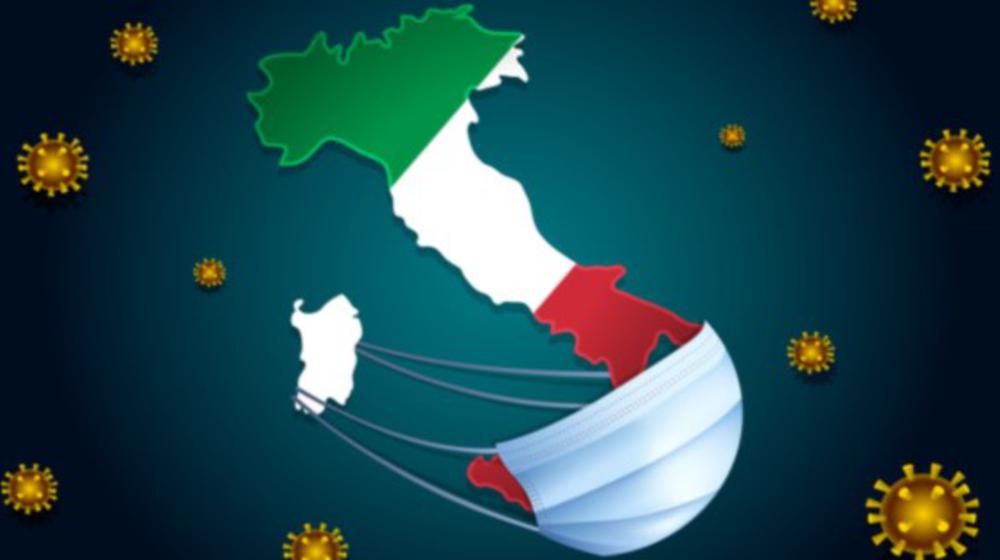
Italy was one of the countries in Europe most affected by the COVID-19 pandemic. Many regulations were introduced to contain the spread of the coronavirus. Fines of up to €3,000 were imposed for non-compliance with safety measures. What was a day in Italy like during the time of the coronavirus? We asked three Italians from Northern Italy to tell us.
AT THE HAIRDRESSER
May 23, 2020. Elisa has an appointment at 7:30 AM with her hairdresser. Upon arriving in the parking lot, she puts on her face mask before getting out of the car. “You have to wear a mask everywhere as soon as you leave the house,” she explains. In front of the salon, she puts on gloves. When she tries to enter, she’s asked to wait outside for a moment. After a few minutes, a freshly styled woman exits, and Elisa is finally allowed in. She is asked to leave the door open. “It must always stay open to keep the air circulating. These are the new safety measures,” the hairdresser explains. A disinfectant dispenser hangs at the entrance. Wearing gloves and using disinfectant is mandatory. The salon looks different than she remembers. It’s unusually quiet. The waiting area is empty. No one is sitting in the three styling chairs. Elisa still has to wait briefly. The chair just used is disinfected, as is the large counter in front of the mirror. The hairdresser disposes of the disposable towels and disinfects her tools. Now everything is ready. Elisa may sit down but must not touch anything. There’s nothing to touch anyway: the counter is empty and there are no magazines in sight. “Before, you could chat with the other customers. Now you feel alone,” says Elisa. When speaking with the hairdresser, she must keep a two-meter distance. During the haircut, only indirect communication through the mirror is allowed if necessary. After an hour, she’s done. At the counter, she must pay by card. A protective shield at the counter is also part of the new measures. As she walks out the door, the hairdresser begins disinfecting the chair.
AT THE DENTIST
May 25, 2020. We’re in the region of Friuli Venezia Giulia, near the Austrian border. The COVID situation here is not as critical as in other Italian regions. Carlo has a dental appointment today for a hygiene treatment. He rings the doorbell of the dental office. The dentist opens the door. Keeping the necessary distance, she measures his temperature with a contactless forehead thermometer. “No fever. Please come in and go to the washroom to wash your hands for at least one minute and up to the wrists,” she instructs. She wears a white hooded overall, gloves, a face mask, and a face shield. After disinfecting his hands, Carlo sits in the waiting room. The room is empty: just a few chairs, nothing else. He receives a questionnaire to assess whether he has symptoms or might be infected due to his behavior. When he returns the form, the pen he used is disinfected. Then he is led into the treatment room. He must first rinse his mouth with a hydrogen peroxide solution and then with mouthwash. The hygiene treatment can begin. “I will perform the hygiene manually to avoid generating aerosols. It will take a bit longer,” the dentist explains and begins.
IN THE SUPERMARKET AND PHARMACY
May 28, 2020. Today we accompany Stefania on a shopping trip. It’s morning and she first drives to the supermarket. She parks the car, puts on her mask, and enters the building. At the entrance, there’s a traffic light on the left and an automatic disinfectant dispenser on the right. You must disinfect your hands before putting on gloves. “If the light is green, one person—and only one person—is allowed to enter the supermarket,” Stefania explains. In the fruit and vegetable section, you must wear additional disposable gloves over your own before touching any produce. Many customers keep the double gloves on throughout their shopping and dispose of them at the checkout in designated bins. Throughout the supermarket—not just at the checkout—there’s a rule to maintain a distance of 1.5 to 2 meters. “Customers usually follow the rules. If not, for example if someone isn’t wearing gloves, they are immediately approached by supermarket staff,” says Stefania.
Our shopping trip continues to the pharmacy. Here too, a large sign stands at the entrance reading: “Temperature check and hand disinfection MANDATORY before entering the pharmacy.” To the right of the entrance is a device with a built-in forehead thermometer. The measured temperature is displayed on a screen. Further right are two disinfectant dispensers. Pharmacy staff wear masks and gloves and advise customers from behind glass panels. What about gloves here? “Wearing gloves is mandatory in public spaces, and therefore also in pharmacies. That’s why disposable gloves are almost sold out everywhere,” Stefania explains. Stefania is a teacher. She works at a primary school. All schools in Italy have been closed since March 5. “Some lessons are held via Skype and children receive homework by email.” Schools will reopen in September. “I hope the fear of a second COVID wave remains unfounded,” says Stefania—and we hope so too.