

How much tip is appropriate? How much is too much? Whether you’re paying for a taxi ride or a restaurant visit, the question of how much tip to give arises not only when traveling abroad. After all, no one wants to appear stingy or arrogant.
Our guide provides comprehensive information about cultural differences regarding tipping, so you can avoid awkward situations when paying—at home, on holiday, or on business trips.
The most important points summarised
- Tipping in Austria and many European countries is a voluntary extra payment added to the bill. Socially, however, there is a certain expectation of tipping, especially in the hospitality sector.
- It is common to tip in restaurants, cafés, bars, as well as for craft services, delivery services, or taxis.
- Usually, people tip 5 to 10 percent of the purchase price or round up to an even amount.
- Tipping is not a duty but an expression of appreciation for satisfactory service.
Where does the term "Trinkgeld" (tip) come from?
The tradition of tipping dates back to the late Middle Ages. Messengers, craftspeople, or coach drivers were given a small amount of money so they could treat themselves to a drink in the donor’s honour. In the 18th and 19th centuries, tipping became part of everyday service culture, for example during coach travel.
Who does the tip belong to?
Tipping is an important source of income for service staff. In Austria, it is generally tax-free, provided it is given voluntarily and is customary. In gastronomy, it is usually shared among staff. Note: In Austria, tips are tax-free but subject to social security contributions. When paying by card, these contributions are automatically deducted from the tip.
Whom do you tip?
Tipping is considered good manners in restaurants and certain service sectors, such as:
- Restaurants
- Delivery services
- Hotel housekeeping
- Hair salons
- Nail studios
- Taxis
Food and drink
In counter-service situations, such as at a bakery or butcher, tipping is unusual. Grey areas exist when picking up takeaway food or at food stands.
If each drink in a pub is paid immediately, you can round up for the first drink and leave a small tip for good service when leaving.
At the hotel
Tipping housekeeping is customary. You can leave the tip on the bedside table or pillow, while tips for luggage service should be handed over personally.
Concierge staff also occasionally receive tips. If you dine at the hotel restaurant or drink at the bar and are satisfied, you may also tip the service staff.
You can give tips in cash or have them added to the hotel bill at checkout with a note.
Craftspeople
You may also tip craftspeople, especially when the work was completed promptly.
Do I have to tip?
No, tipping is voluntary. People tip because it is a cultural expression of appreciation for good service.
If the service is not satisfactory, you should address the issue early so staff can correct it. If the issue is resolved, you may still tip with a clear conscience.
How much do I tip in restaurants? – The 10% rule in Europe
Basically, around ten percent tip is expected in European countries. In Greece, however, you should ensure not to leave too many coins on the table. This might be perceived as an insult. In Turkey, 10 to 15 percent is common – servers often rely on tips, which are an integral part of the income they live from. In France, it is also normal to give 10 to 15 percent of the bill amount as a tip.
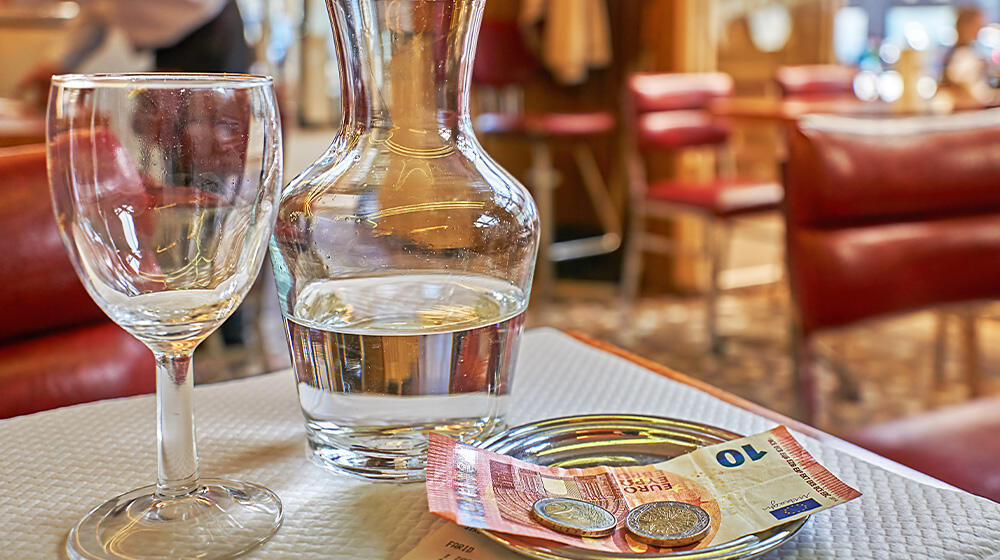
While tip amounts are similar in Europe, there are major differences in how the tip is given. In Turkey, the tip is not handed over personally. It is placed on a bill holder after payment. Similar practice exists in France, where tipping is called “pourboire,” and in Spain, where it is called “propina”: you leave the money on the table, and personal handover is not desired.
What should be considered when paying by card?
Those who pay by card in a restaurant should ideally still give the tip in cash, so it reaches the server without deductions. In many Austrian restaurants, tips can now be added directly to the card payment. Nevertheless, some staff prefer cash. When in doubt, ask the server whether tipping by card is possible.
“Coperto” in Italy
When you see “coperto” in a restaurant, you must expect an additional charge for cover and service. You may still give an additional tip if you wish.
Great Britain and Ireland
If no “service charge” is listed on the bill, tipping 10 to 15 percent is customary in these countries.
Tipping regulations worldwide:
No tipping in Japan
In many regions of Japan, tipping is considered an insult or at least impolite. Perfect service is natural in Japan. You express your gratitude best verbally or with a smile.
Compulsory tipping in the USA
Planning a trip to the USA? Then take note of this: in the USA, servers often earn very low wages and depend on tips. Here, 15 to 20 percent is considered appropriate and, to an extent, obligatory. Not giving a tip is an absolute no-go in the United States. The expected tip amount is stated at the bottom of the bill as “Tip.”
Tunisia, Morocco, and Egypt
In these North African countries, tipping is an act of politeness and very common. The amount can vary. Those who do not give a tip are seen as arrogant and impolite.
How much tip do you give in a hotel?
For housekeeping, you can plan about two euros per day; for luggage carrying, one to two euros.
How much tip is appropriate at the hairdresser?
If you like your haircut and styling, ten percent is appropriate.
How much tip for craftspeople?
For craftsman services, you decide completely voluntarily whether you want to give a tip. Very satisfied? Then choose the amount depending on the scope of the work or whether the service was provided outside regular working hours in an emergency.
- For smaller jobs (up to four hours), you can give 5 to 20 euros.
- If the project lasts several days, you can consider a tip of up to fifty euros.
- For emergencies, such as fixing a burst pipe on a public holiday, you can be generous – but no more than 50 euros.
However, it is more common to offer drinks or a small snack to craftspeople.
Conclusion: informed and protected – travel relaxed
Tipping is an important sign of appreciation in many countries – but it works very differently around the world. If you know the key rules, you can avoid misunderstandings and enjoy restaurant visits, hotel stays, and excursions without stress. With our information and tips, you are well prepared on the topic of tipping in Austria, Europe, and many popular travel destinations.
What you have less control over as a traveller: unexpected incidents before or during your trip – such as sudden illness, an accident, or other important reasons that may force you to cancel or interrupt your trip. Protect yourself from cancellation and interruption costs with the Trip Cancellation Protection of the European Travel Insurance.
Take out CancellationCover now
FAQ: How much do you tip?
How much tip is customary in Austria and Europe?
In Austria and many European countries, 5–10 percent is considered appropriate. Often people also simply round up. Tipping is particularly expected in gastronomy, taxis, and hotels.
Do I have to tip?
No, tipping is voluntary – except in the USA. It shows appreciation when you were satisfied with the service. In case of problems, it is worth addressing the issue early so service can be improved.
How much tip do I give in a hotel?
For housekeeping, about 2 euros per day are customary; for luggage service, about 1–2 euros per bag. You can hand the tip over personally or leave it visibly in the room.
How do I tip when paying by card?
Many places allow adding a tip when paying by card. However, cash reaches the staff without deductions and is therefore often preferred.
What does “Coperto” mean in Italy?
“Coperto” is a cover and service charge that is automatically added. An additional tip is not mandatory but appreciated.
How much tip is appropriate in the USA?
In the USA, tipping is practically obligatory. 15–20 percent is common, as service staff rely on tips. The bill often lists suggested amounts (“Tip”).
Should I tip in Japan?
No. In Japan, tipping may be considered impolite or offensive. A friendly thank you is entirely sufficient.
From our travel magazine
Business etiquette around the world
Bleisure-Travel
Credit cards and Travel insurance