

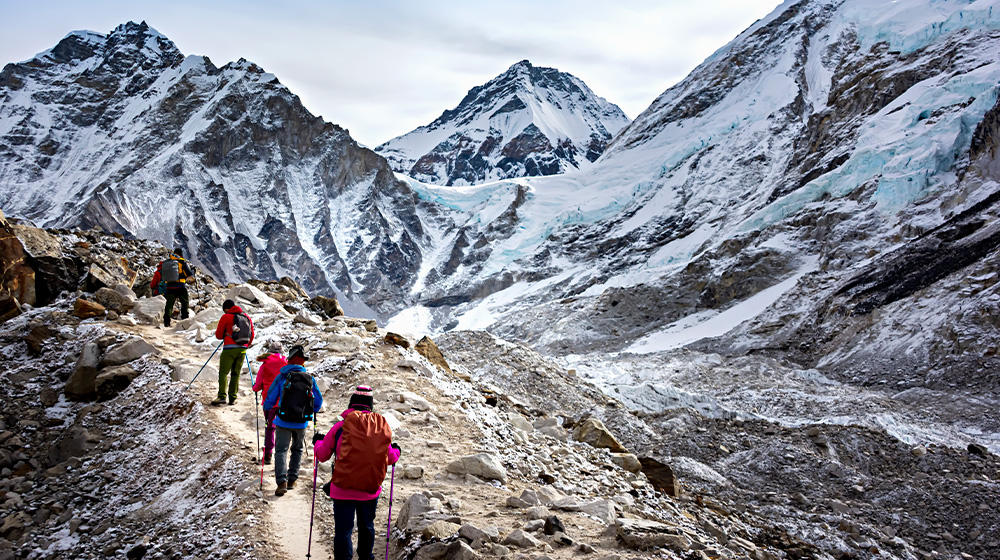
Imagine this: finally, your first ascent into high‑altitude mountains. It feels like a dream—crisp air, wide‑open views, excitement for the summit ahead. But in the evening you suddenly develop a headache, your stomach feels unsettled, and you sleep poorly. Many people assume it’s stress, dehydration, or simply “lack of fitness.” In reality, these symptoms may be early signs of altitude sickness—and it can affect anyone, regardless of fitness level or experience.
Because high altitude requires quick decisions, good preparation, clear rules, and rapid organization of help in an emergency, this guide explains in a beginner‑friendly way how to recognize typical symptoms, how to prevent them through proper acclimatization, and when descending is the most important choice.
Important: This article does not replace medical advice. If you experience severe or rapidly worsening symptoms, please seek medical help.
After reading, you will know:
- How to reliably recognize symptoms of altitude sickness
- From what altitude the risk typically increases—and why sleeping altitude is critical
- How acclimatization (300–500‑meter rule) effectively prevents symptoms
- What to do in case of symptoms (stop, rest, descend)
- Which warning signs indicate high‑altitude pulmonary or cerebral edema
The most important points at a glance
- Altitude sickness results from lack of oxygen due to ascending too quickly.
- The key symptom is usually headache plus additional complaints (e.g., nausea, dizziness).
- Acclimatization is the best prevention: ascend slowly and plan rest days.
- If symptoms appear: do not continue ascending; if in doubt, descend (at least 500 meters).
- Resting breathlessness, confusion, or impaired coordination are emergency signs: descend immediately and call emergency services.
What is altitude sickness—and why do people get it?
Altitude sickness is a term for the symptoms that may occur when your body cannot adapt quickly enough to the reduced oxygen pressure at high altitude. It includes acute mountain sickness and the rarer but dangerous high‑altitude pulmonary edema (HAPE) and high‑altitude cerebral edema (HACE).
What matters most is not how fit you are, but how quickly you ascend and how high you sleep.
Causes: lack of oxygen (hypoxia) & sleeping altitude
As altitude increases, air pressure decreases—making oxygen uptake more difficult. The body reacts with faster breathing and an increased heart rate. Oxygen saturation is often lowest at night, which is why sleeping altitude is a key risk factor.
Remember:
- The faster the ascent, the higher the risk.
- Sleeping altitude matters more than maximum daytime altitude.
- Fitness does not reliably protect you.
Altitude sickness symptoms: what to look out for
Typische Symptome der Höhenkrankheit sind Kopfschmerzen in Kombination mit weiteren Beschwerden wie Übelkeit, Erbrechen, Schwindel, Müdigkeit oder Schlafstörungen. Dadurch werden sie leicht mit Anzeichen eines grippalen Infekts oder Migräne verwechselt.
Zur groben Orientierung: Die Symptome beginnen häufig innerhalb von 4 bis 12 Stunden nach dem Aufstieg und treten ab etwa 2.000 bis 2.500 Höhenmeter auf – achten Sie aber darauf, dass diese Angaben nicht allgemeingültig, sondern individuell sehr unterschiedlich sind.
Typical symptoms include headaches combined with nausea, vomiting, dizziness, fatigue, or sleep disturbances. They are often mistaken for flu symptoms or migraine.
As a general guideline: symptoms often begin within 4–12 hours of ascent and typically appear above 2,000–2,500 meters—though individual reactions vary greatly.
Mild altitude sickness (acute mountain sickness): common signs
If you experience mild symptoms, stop ascending and allow your body time to adjust. Many symptoms improve with rest at the same altitude. Watch for:
- Headache (often forehead/temples)
- Nausea or loss of appetite
- Dizziness
- Fatigue or reduced performance
- Sleep disturbances
Emergency: high‑altitude pulmonary or cerebral edema—warning signs
Although rare, severe forms are dangerous. Every minute counts, and descending or evacuation is essential.
Warning signs of pulmonary edema (HAPE):
- Shortness of breath at rest, coughing, bluish lips, bluish skin: suspected high‑altitude pulmonary edema
- Unsteady gait (ataxia), confusion, severe headache: suspected high‑altitude cerebral edema
- Immediate action: do not continue ascending, descend immediately, and call emergency services.
Preventing altitude sickness: acclimatization that works
Die wirksamste Prävention gegen eine Höhenkrankheit ist stufenweiser Aufstieg: So geben Sie Ihrem Körper die Zeit, die er braucht, um sich anzupassen. Eine akute Akklimatisation dauert typischerweise einige Tage.
Oberhalb von 2.500 Meter empfiehlt das öffentliche Gesundheitsportal Österreichs folgenden Richtwert für den Aufstieg: maximal 300 bis 500 Höhenmeter Schlafhöhengewinn pro Tag sowie einen Pausentag alle 3 Tage.
The most effective prevention is gradual ascent. Acclimatization usually takes a few days. Above 2,500 meters, Austria’s public health portal recommends this guideline:
- Maximum increase in sleeping altitude: 300–500 meters per day
- Rest day every 3 days
The 300–500‑meter rule: how to apply it
Plan your route so your sleeping altitude rises moderately and you include rest days.
- Above 2,500 m: increase sleeping altitude by 300–500 m/day
- Every 3 days: take a rest day (or keep the same sleeping altitude)
- Symptoms = stop: don’t push through—pause and avoid further ascent
Additional tips: hydration, pace, avoid alcohol
During strenuous activity at altitude, proper hydration is key. Above 2,500 meters, 3–4 liters of water per day are recommended. Light‑colored urine is a good indicator of adequate fluid intake.
Avoid alcohol and sleeping pills, as they can worsen symptoms or depress breathing—especially during the first 48 hours.
- Drink plenty (pale urine as a guideline)
- Keep physical exertion light during the first 1–2 days
- Avoid alcohol for the first 48 hours
What to do if altitude sickness occurs (Stop–Check–Descend)
If symptoms occur, the most important rule is: do not continue ascending. Many mild cases of altitude sickness improve with some rest, adequate fluid intake, and a painkiller from your travel first‑aid kit. If you continue to feel unwell or if your condition worsens, then descending is the best treatment.
Mild symptoms: how to respond
- Stop ascending and stay at the same altitude for 24–48 hours
- Hydrate, stay warm, rest
- Painkillers may help relieve headaches
If symptoms do not improve: descend 500 to 1,000 meters
If symptoms persist or worsen, descend at least 500 meters or return to your last symptom‑free sleeping altitude.
Better to descend early than too late.
Emergency signs: organize evacuation
If pulmonary or cerebral edema is suspected: descend immediately or call emergency services for evacuation, oxygen administration, and medical treatment.
Conclusion: well prepared for your trip
Altitude sickness is not an “beginner’s mistake” but a normal physiological reaction to low oxygen—and it can affect anyone. Good planning and gradual acclimatization are your best protection: monitor your sleeping altitude, schedule rest days, and take the first days of your tour slowly. If symptoms appear: stop—and descend if necessary. Pay close attention to emergency signs such as resting breathlessness or impaired coordination.
A helpful next step for your mountain trip: plan a brief medical consultation before departure—especially if you have pre‑existing conditions or aim for ambitious altitudes. And consider adequate travel insurance. For peace of mind during your mountain holiday, we recommend our CompleteCover package: it covers you abroad for illness or accidents, including medical repatriation and rescue. It also protects you if you need to cancel your trip.
Frequently asked questions about altitude sickness
At what altitude can altitude sickness occur?
Altitude sickness can occur from around 2,000 meters and is more common above 2,500 meters.
How can I best recognize altitude sickness?
The key symptom is headache plus at least one additional symptom such as nausea, dizziness, fatigue, or sleep disturbance—especially after rapid ascent.
What is the most important prevention?
Ascend slowly and increase sleeping altitude only moderately (300–500 meters per day above 2,500 meters; one rest day every three days).
What should I do at the first symptoms?
Do not continue ascending. Rest at the same altitude for 24–48 hours and hydrate. If symptoms persist, descend.
When does it become dangerous?
It becomes dangerous if signs of pulmonary edema (resting breathlessness, cough, bluish skin) or cerebral edema (ataxia, confusion, severe headache) appear.