

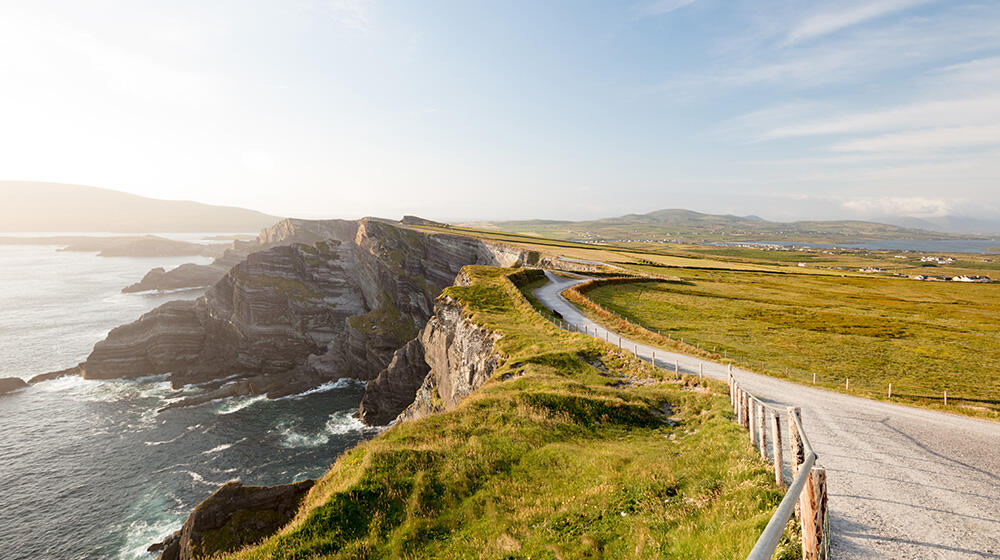
In Ireland, mass tourism—like in Barcelona, Venice, and other globally promoted destinations—is fortunately not an issue. Even though it can get busier at times, especially in summer, particularly in Galway or along the picturesque Ring of Kerry. If you are looking for a holiday combining culture, vibrant cities, and at the same time unspoiled nature, then the “Green Island” is exactly right for you. As a round trip, for example with a rental car or camper, you can explore Ireland in all its beauty without missing any sights. Here we provide you with many valuable tips on how to experience the European island authentically.
The most important points at a glance
- Ideal starting point Dublin: The capital, as a historical and cultural centre, offers the perfect beginning for a trip through Ireland.
- Perfect for a round trip: Ireland offers a mix of natural experiences, historical sites, and urban highlights during a road trip.
- Historic Rock of Cashel: A cultural highlight along the route, this medieval ruin offers sweeping views over green hills.
- Rugged coastal nature: Along the coast and inland, natural attractions such as the Cliffs of Moher impress with their unspoiled beauty.
- Creative hub Galway: The harbour city is known for its traditional pub culture and lively residents.
- Strategic overnight stays: Plan stops in Dublin, the Ring of Kerry, Galway, Donegal, and the Heartlands.
- Changeable weather: Especially on the west coast, expect unpredictable weather and plan your route and clothing accordingly.
Sightseeing in Dublin – a capital full of history
Start your round trip in Dublin. Ireland’s capital is rich in culture, history, and lively pubs. The city is the perfect starting and ending point for any trip to Ireland. Plan at least one to two nights here.
Trinity College and the Book of Kells are must-sees. Founded in 1592, Trinity College Dublin impresses with elegant Georgian architecture and houses a very special treasure: the famous Book of Kells. The manuscript is displayed in the Long Room Library, one of the most impressive library halls in Europe.
Another classic is the Guinness Storehouse, the visitor centre and museum of the iconic beer brand at the historic St. James’s Gate Brewery. Here you can learn all about the history and brewing process of the famous drink – tasting included.
The Temple Bar district is ideal for diving into Dublin’s pub culture. Cobbled streets, narrow alleys, and plenty of live music shape this historic neighbourhood on the River Liffey. It is especially lively in the evenings. While not necessarily traditionally Irish, many consider it a highlight. In pubs and restaurants, the question of tipping often arises – usually 10–15% is a good guideline if you were happy with the service.
Rock of Cashel – a medieval landmark in Tipperary
Those who love historical sites and the Middle Ages will be delighted by the Rock of Cashel. The landmark of County Tipperary towers impressively on a limestone rock and is among Ireland’s most fascinating monuments. The complex features spectacular ruins that appeal to architecture enthusiasts and history fans alike. From the top, you enjoy fantastic views of the green hills – especially unforgettable at sunset.
The Rock of Cashel is ideal as a stopover on the way south, between Dublin, Cork, or Killarney.
Cork – a perfect stop on the way west
Cork and its surroundings are excellent for an overnight stay. The city is vibrant and well connected, making it a relaxed starting point before heading to the west coast.
Ring of Kerry & Killarney National Park
The famous Ring of Kerry is a roughly 180-kilometre panoramic road circling the Iveragh Peninsula. The route offers constantly changing, breathtaking views of cliffs, the bays of Kenmare and Dingle, and impressive mountain ranges.
Along the way you experience the typical Irish landscape: a constant mix of natural and cultural highlights including lakes, waterfalls, castles, and small villages.
The Ring of Kerry is perfectly combined with a visit to Killarney National Park, home to viewpoints such as Ladies View, the ruins of Ross Castle, and the Victorian mansion Muckross House.
Cliffs of Moher – Ireland’s iconic cliffs
The Cliffs of Moher are among Ireland’s most famous natural wonders. The dramatic cliffs rise more than 200 metres and are a classic postcard motif. They are especially spectacular in late afternoon at sunset, when the light softens and the sky shifts colour.
Galway – young, creative & full of music
Galway is a harbour city on Ireland’s west coast and considered the cultural hub of the county. Stone façades, colourful houses, and lively streets shape the cityscape.
The city is young, creative, and musical. In the Latin Quarter, cafés, galleries, and boutiques line the streets. And of course, there are many traditional pubs with frequent live Irish music.
Galway is perfect for overnight stays and as a starting point for trips into wild Connemara.
Connemara – green, wild vastness
Connemara stands for authenticity. The region is shaped by moorlands, rocky hills, and fresh Atlantic air. Ideal for hiking and perfect for anyone seeking tranquillity. Light traffic and wide, wild landscapes create a feeling of freedom.
Wild Atlantic Way – Ireland’s dream coastal route
The Wild Atlantic Way stretches more than 2500 kilometres along the entire west coast. It connects secluded bays, dramatic cliffs, green hills, and charming coastal towns. Many sections are still quiet even in summer and feel almost untouched.
The north: discovering Donegal & Inishowen
To escape crowds, the quiet north of Ireland is ideal. In Donegal, you will still find traditional villages, wild coastlines with rugged cliffs, and even abandoned fish factories. Traditional crafts such as knitting mills still operate here. Beautiful peninsulas such as Inishowen – famed settings in Irish literature – retain their magical charm. You’ll also find cosy pubs and small grocers offering delicious Irish specialities.
Optional: Detour to Northern Ireland
If you have time, extend your journey with a detour to Northern Ireland. A spectacular highlight is the Giant’s Causeway – perfect as the northernmost point of your trip.
The Causeway Coastal Route offers many stops. Particularly popular is the Carrick-a-Rede Rope Bridge near Ballintoy: a suspension bridge crossing 30 metres above a narrow sea channel, offering thrills and stunning views.
To enter Northern Ireland, you currently need a valid passport and an ETA (Electronic Travel Authorisation), as the UK is no longer part of the EU. The currency is the British pound.
Giant’s Causeway – wind, waves & legends
The Giant’s Causeway consists of about 40,000 hexagonal basalt columns leading like a staircase into the sea. This UNESCO World Heritage Site was formed around 60 million years ago by volcanic activity. It is especially impressive in strong wind and surf.
A legend adds to its magic: the giant Finn McCool is said to have built the causeway to reach Scotland and challenge his rival.
Return to Dublin
From here, you have two options: Either travel back to Dublin through Northern Ireland, perhaps with a stop in Belfast – known for its street art, museums, and political history – or take a detour through the Heartlands, ideal for slowing down and enjoying Ireland’s quieter side.
The Heartlands – a mix of nature and culture
To discover the original Ireland, we recommend the Heartlands. This region forms the heart of the country, stretching between Sligo and Limerick. Locals spend their leisure time here at lakes and rivers, or hiking along the new Beara Breifne Way – 500 kilometres of breathtaking scenery. Experience Irish traditions, a relaxed way of life, and attractions such as the National Famine Museum in Strokestown Park or the McKernan Woollen Mills, where you can purchase beautiful Irish scarves.
How to explore Ireland relaxed and worry-free
Ireland is wonderfully diverse on a round trip – with vibrant cities like Dublin and Galway, natural wonders like the Cliffs of Moher and Giant’s Causeway, and unspoiled regions such as Connemara and the Heartlands. Anyone who takes enough time will experience a country full of stories, traditions, and warm encounters. Even in high season, many peaceful places allow you to enjoy Ireland authentically.
To travel worry-free from the start, suitable travel insurance is essential. The European Health Insurance Card offers basic coverage in the public healthcare system, but it does not replace comprehensive protection. Travel more relaxed with our Annual Complete Cover. It protects you if things don’t go as planned, covering illness, lost luggage, trip disruption, cancellations, and emergencies.
Get your Annual-CompleteCover now
FAQ: Your round trip in Ireland
What is the best time to travel for a round trip in Ireland?
The most popular travel time is from May to September, as the days are longer and brighter. However, the weather remains changeable throughout the year, especially on the west coast. The low season is also suitable – with fewer visitors and lower prices.
How many days do you need for a round trip in Ireland?
For the classic highlights, 7–10 days are recommended. If you also want to explore the north or Northern Ireland, it’s best to plan 12–14 days. Shorter trips are possible but less relaxed.
Which sights should not be missed on any round trip?
The most popular highlights include Dublin, the Rock of Cashel, the Ring of Kerry, the Cliffs of Moher, Galway, Connemara, and – optionally – the Giant’s Causeway in Northern Ireland. Each region offers its own cultural and scenic features.
Do you need a rental car for Ireland?
A rental car is ideal for travelling flexibly, especially in rural areas. The roads are easy to drive on. Alternatively, there are bus and train connections, but with fewer spontaneous options outside major cities.
Are there any special entry requirements?
For Ireland, a valid passport or ID card is sufficient. For Northern Ireland, you currently need a passport and an ETA, as it belongs to the United Kingdom. Information can be found at the BMEIA: https://www.bmeia.gv.at/.
How expensive is a round trip through Ireland?
Costs vary depending on the season. Accommodation, rental cars, and restaurants are usually slightly above the Western European average. Those who book early or travel in the low season can save money.
Which travel insurance is recommended?
For comprehensive protection, the Annual-CompleteCover is ideal. This ensures you are covered on all trips within one year – including cancellation, trip interruption, medical care, luggage protection, and more.
From our travel magazine:
Well prepared for your vacation with a packing list
Better not travel without travel insurance!
Understanding and overcoming fear of flying: How to travel more relaxed