

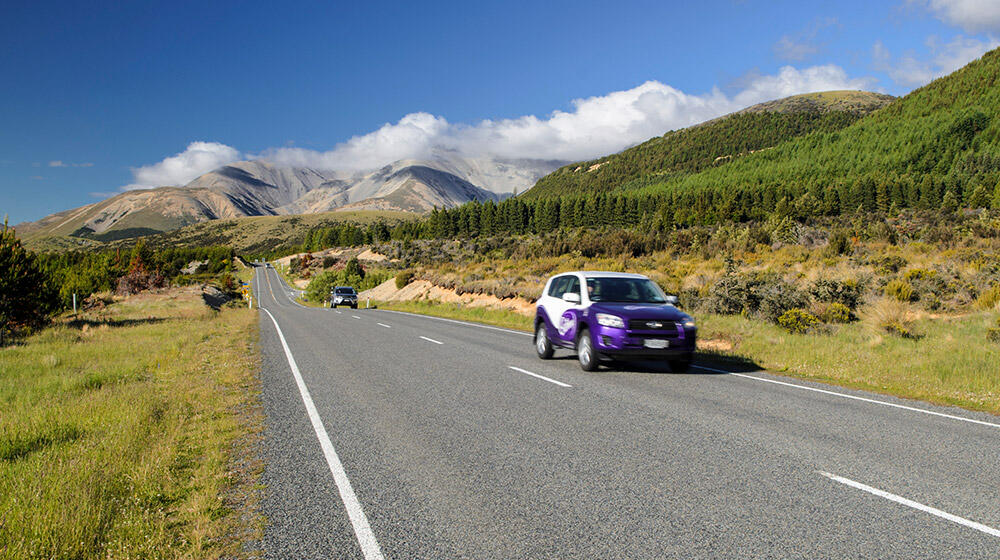
If you are travelling in countries such as the United Kingdom, Ireland, Australia or New Zealand for the first time, driving on the left often feels unfamiliar. Many travellers report that even the first few metres can trigger uncertainty: “How do I get used to driving on the left?”, “How does a roundabout work?”, or “What do I need to know about a rental car?”. These questions are completely normal! Good preparation takes away worry and nervousness.
This guide shows you step by step what you should pay attention to, which rules apply and how to handle typical situations safely. It helps you arrive relaxed, drive with more awareness and enjoy your holiday without worries.
The most important things at a glance
- When driving on the left, you drive on the left and overtake on the right – the traffic layout corresponds to a mirrored version of the Austrian system.
- Take your time to get used to it: start your first drives on simple, less busy routes.
- A right-hand-drive vehicle makes orientation easier, but it’s not a must.
- Roundabouts are driven clockwise – traffic inside the roundabout has priority.
- Attention and regular breaks are essential to avoid accidentally drifting into the wrong lane.
In which countries does left-hand traffic apply – and what should you expect?
Around one third of the world drives on the left. Popular travel destinations with left-hand traffic include the United Kingdom, Ireland, Malta, Australia, New Zealand, Japan, India, Thailand, South Africa and many more. Although the traffic direction is the same in these countries, road conditions vary greatly: some regions have well-signposted infrastructure, while in others traffic is less regulated by signage and appears less orderly.
Which left-hand-traffic countries are suitable for beginners?
If you’re driving on the left for the first time, it’s advisable to make your first attempts in places with manageable traffic conditions. Particularly pleasant for beginners are countries such as:
- The United Kingdom and Ireland: clear signage, well-structured roads
- Australia and New Zealand: well-developed infrastructure
- Malta: short distances, easy orientation
How about a motorhome trip through New Zealand, for example? Travel blogger Elena Paschinger did it and shares her tips and experiences here.
More complex, and less suitable for your very first left-hand-drive experience, is traffic in countries like India, Thailand or Malaysia. Here, it’s worth using public transport initially or practising short distances first.
Right-hand drive or left-hand drive – which is safer?
In left-hand traffic, you can drive both a right-hand-drive vehicle (steering wheel on the right) and a left-hand-drive vehicle (steering wheel on the left) – both are possible. The advantage of a right-hand-drive vehicle is that it is specifically designed for left-hand traffic and makes orientation towards the centre of the road easier. However, the seating position may feel unfamiliar at first.
What to watch out for with a right-hand-drive vehicle:
- Indicator and wiper levers may be mirrored in layout.
- You operate the gear stick of a manual car with your left hand.
- The pedals for accelerator, brake and clutch are arranged the same (from right to left).
- An automatic transmission makes the adjustment significantly easier.
Our tip: If you choose an automatic car, you can fully concentrate on the new driving direction.
Are the traffic rules different in left-hand traffic?
The basic rules of left-hand traffic are essentially mirrored versions of right-hand traffic. Drive attentively and pay special attention to clear road markings, arrows and signs when turning. These help you maintain orientation. In many countries, such guidance is placed especially for tourists.
These reminders help you adapt to left-hand traffic:
- Drive on the left, overtake on the right
- Orient yourself towards the centre of the road so you don’t drift too far left
- When turning, consciously focus on the correct lane
- On multi-lane roads: left lane for driving, right lane for overtaking
Handling typical traffic situations safely
Roundabouts, intersections and turning in left-hand traffic are unfamiliar for beginners and may seem complex at first glance. Thanks to markings and a bit of practice, these manoeuvres quickly become routine.
How does a roundabout work in left-hand traffic?
In the UK, Ireland and many other left-hand-traffic countries:
- Enter from the left
- Drive clockwise
- Traffic inside the roundabout has priority
- “Give Way” signs regulate priority
What to consider when turning and at intersections?
Turning left in left-hand traffic is similar to turning right in Austria and is usually uncomplicated: watch for other road users and remember the shoulder check.
When turning right, you cross oncoming traffic, so be especially careful:
- Approach the centre line slowly
- Watch oncoming traffic
- Look out for cycle lanes and pavements
- After turning, merge into the left lane
Staying safe as a pedestrian in left-hand traffic
Many people underestimate the power of habit and unknowingly put themselves at risk in left-hand-traffic countries. Avoid this mistake by keeping these behaviours in mind:
- Look “right – left – right”
- Use pedestrian crossings and traffic lights
- Pay attention to pavement markings such as “Look right”
- Accompany children closely and hold their hands at first
Preparing for your first drive – start relaxed
If you plan and prepare your first drive in left-hand traffic calmly, it’s the best way to reduce uncertainty. Drive attentively, plan short stages, avoid night driving during the first days and give yourself time to adjust. This way, you sit behind the wheel more relaxed and gain confidence step by step.
Which documents, insurance & entry requirements?
Do you want to explore your destination with a rental car? Or plan a road trip with your own vehicle? Then arrange the following documents in good time – so you start your holiday prepared and reassured:
- Valid driver’s licence or international driving permit
- With your own vehicle: registration and insurance documents (check validity in your destination country)
- With a rental car: rental contract and insurance certificate
- Suitable travel insurance
Important information on entry and driving licence regulations for your travel destination can be found at the Federal Ministry for European and International Affairs (BMEIA).
Get to know your rental car calmly
If you rent a car at your destination, don’t drive off immediately. Instead, take enough time to familiarise yourself with the right-hand-drive vehicle and with the unfamiliar left-hand traffic. Take it step by step:
- Adjust seat, mirrors and steering wheel
- Test control levers and gear stick
- Set navigation before starting your trip
- Take a short test drive in the car park
Our tip: At first, stick a small note saying “Drive left” on the dashboard. This helps remind you of the correct lane.
Behaviour on the road & in emergencies
Especially when driving in left-hand traffic for the first time, stay calm, drive defensively and attentively. If you feel unsure or nervous, this behaviour is advisable:
- Take frequent breaks
- Don’t let yourself be pressured
- Stop briefly if uncertain
- Know the emergency numbers (e.g. 112 in Europe, 999 in the UK)
Our tip: Drive consciously slowly for the first few kilometres – your brain adapts to the unfamiliar direction more quickly than you think.
Conclusion: Staying safe with left-hand traffic on holiday
Left-hand traffic may seem challenging at first, but with preparation, calmness and clear rules, the adjustment succeeds surprisingly quickly. Many travellers report that routine develops after just a few hours. What matters most are defensive driving, sufficient breaks and the willingness to adapt step by step to new procedures.
But even with the best preparation, not everything can be planned. If things turn out differently than expected, travel insurance provides security. Our Complete Cover protects you comprehensively from high costs and helps you if, for example, you have to cancel or cut short your trip unexpectedly. We also cover the costs of medical treatment abroad in case of illness or accident – including repatriation, search and rescue. Well protected, you can focus on what really matters: a relaxing and safe holiday.
FAQ: Left-hand traffic
Is left-hand traffic more dangerous than right-hand traffic?
No. The risk lies less in the system itself and more in the driver’s adjustment to the unfamiliar driving direction. With preparation and defensive driving, you can drive safely.
How long does it take to get used to left-hand traffic?
Most people feel noticeably more confident after a few hours. After one or two days, the adjustment becomes routine for many.
What should I do if I accidentally drive on the wrong side?
Stay calm, slow down gently and return to the correct lane when it is safe. Afterwards, it’s best to take a short break.
Which insurance do I need for a rental car?
For your rental car, comprehensive insurance with a low excess is recommended. For your personal protection on holiday, we recommend travel insurance – for example, our comprehensive CompleteCover.
From our travel magazine:
Better not travel without travel insurance!
Backpacking: how to make your backpacking trip safe and relaxed