

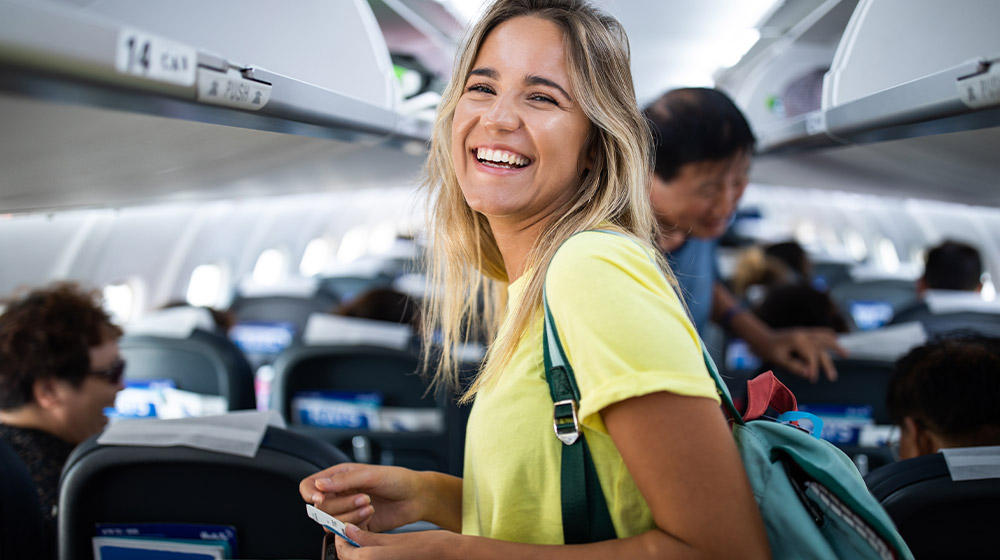
The best tips for preparation
A long-distance trip to Vietnam or the USA sounds like an adventure – if only it weren’t for the many hours spent on the plane. Tight seats, dry air, constant movement of fellow passengers heading to the lavatory, and possibly turbulence: a long-haul flight can be quite exhausting – especially if you're flying with a baby or toddler. But with good preparation, your journey can be much more relaxed. We're here to help: with answers to your most frequently asked questions about long-haul flights and practical tips for your well-being on board. Time will fly by.
Key takeaways at a glance
- Book early: Ideally 6–8 months before departure – this way you secure better prices and the best seats.
- Pack smart hand luggage: Pay attention to the airline’s size and weight limits. Our packing list helps you stay organized.
- Stay healthy on board: Drink plenty of water, move regularly, wear compression socks, and use eye drops or chew gum if needed.
- Increase comfort: Wear layered, comfortable clothing, light shoes, and bring a neck pillow.
- In-flight meals: Meals are usually included; special requests must be made in advance. Bring extra snacks.
- Sleep better on the plane: A window seat, sleep mask, earplugs, and possibly natural aids like melatonin can help. Only take sleeping pills after consulting a doctor.
- Don’t forget travel insurance: It protects you in case of illness or emergencies – especially important for long-distance travel.
When is the best time to book a long-haul flight?
Planning ahead means flying cheaper and more comfortably. Ideally, book around 6 to 8 months before departure – prices are often moderate and seat selection is wide. Whether you prefer a window seat or extra legroom: early birds get the best spots.
Compare different airlines – even flights with stopovers can be worthwhile. Pay attention to included services: low-cost carriers often charge extra for luggage, meals, or seat selection. If you didn’t choose a seat when booking, use online check-in: you can usually select your preferred seat 24 to 48 hours before departure.
What can and should go in your hand luggage?
A relaxed long-haul flight starts with smartly packed hand luggage. To have everything important within reach and comply with airline regulations, good preparation is key.
Size and weight limits
Most airlines allow one piece of hand luggage measuring 55 × 40 × 23 cm and weighing up to 8 kg. Check your airline’s exact requirements in advance – they can vary!
Liquid rules on planes
Liquids in hand luggage must be in containers of no more than 100 ml. All containers must fit in a transparent, resealable 1-liter plastic bag. Only one bag per person is allowed.
Packing list: what belongs in your hand luggage
Pack so that you have everything essential during the flight – and are prepared in case your checked luggage is delayed.
Here’s what you should definitely pack in your hand luggage:
- Travel documents: Passport or ID card, visa (if needed), vaccination certificate
- Finances: Wallet with some cash, debit or credit card, health insurance card
- Travel documents: Booking confirmations, hotel and transfer info
- Tech: Smartphone, tablet or laptop with chargers, power bank (only allowed in hand luggage!), headphones
- Medications you take regularly
- Toiletries: Toothbrush, toothpaste, hand sanitizer, lip balm, eye drops
- Comfort items: Neck pillow, sleep mask, earplugs
- Reading material: Book, e-reader, or magazine
- Snacks: Granola bars, nuts, dried fruit
- Chewing gum – helps with pressure equalization
- Refillable water bottle – fill it after security
- Change of clothes for your destination
- Sweater or light jacket – it can get chilly on board
- Compression socks – especially recommended for long flights
How can I avoid health issues on board?
Conditions on planes are tough on the body: dry air, little movement, and low air pressure. To prevent thrombosis, wear compression socks – ideally already when boarding. These are available over the counter at pharmacies or by prescription.
Drink plenty of water, move regularly, and use eye drops or lip balm to combat dry air. For nausea, ginger candies or special anti-nausea gum – also available at pharmacies – can help.
What helps with fear of flying?
Many people feel uneasy when flying. Breathing exercises, progressive muscle relaxation, or calming music can help. A good movie or an exciting book can also be a great distraction. If your fear of flying is severe, consult your doctor before your long-haul flight.
Our tip: If you tend to get nervous, you might feel more comfortable sitting over the wings – turbulence is less noticeable there. Don’t hesitate to talk to the cabin crew – they are trained to handle fear of flying.
How can I make myself comfortable on a long flight?
Wear loose, comfortable clothing in layers. Also pack a light jacket or sweater in your hand luggage – it can get cold in the cabin. Comfortable shoes that are easy to slip off are ideal, as feet often swell during flights.
Our tip: A change of clothes in your hand luggage is practical – especially when traveling to different climates or if your checked luggage is delayed.
What food is available on long-haul flights?
Long-haul flights usually include several meals and drinks. If you need special meals – vegetarian, vegan, gluten-free, etc. – request them at least 48 hours before departure.
It’s also worth bringing your own snacks – like nuts, granola bars, or dried fruit. Avoid strongly scented foods to be considerate of fellow passengers. Be careful with airtight snack packaging like chips: the cabin pressure can cause them to expand.
Make sure to drink enough water during the flight. Since you can only bring water bottles on board after security, we recommend packing an empty bottle in your hand luggage and filling it at the airport.
How can I avoid jet lag?
Jet lag affects many travelers – especially when flying east. Try to adjust to the destination time zone while still on the plane: eat, sleep, and stay awake according to the new time to help your body adapt.
Our tip for the day of arrival: take short naps (max. 20 minutes) instead of sleeping for hours – this helps your body adjust more easily to the new time zone’s day-night rhythm.
How to keep yourself entertained during the flight
Even though many planes offer in-flight entertainment, bringing your own is often the better choice. Download movies, series, podcasts, or audiobooks to your phone or tablet in advance. Noise-cancelling headphones provide peace and better sound quality.
A good book or magazine is also ideal – just in case your tech fails. And don’t forget: pack your power bank in your hand luggage – it’s not allowed in checked baggage.
How to sleep well during the flight
A restful sleep makes the flight more pleasant and your arrival more relaxed. Neck pillows, eye masks, and earplugs are reliable tools for more peace and quiet. You’ll sleep best by the window – where you’re less likely to be disturbed. If you like, you can use natural remedies like valerian or melatonin – but test them beforehand to ensure you tolerate them well. Only take sleeping pills after consulting a doctor, and never combine them with alcohol.
Our tip for undisturbed sleep on the plane: fasten your seatbelt over your blanket or jacket so it’s visible. This way, the cabin crew can see you’re buckled up during turbulence and won’t need to wake you.
Travel safely and stress-free with the right travel insurance
Especially for long-haul flights and trips to faraway countries, travel insurance is essential if you want to enjoy your vacation worry-free. Whether it’s an unexpected illness shortly before departure or a medical emergency on the other side of the world: with the CompleteCover insurance from Europäische Reiseversicherung, you’re optimally covered for your flight.