
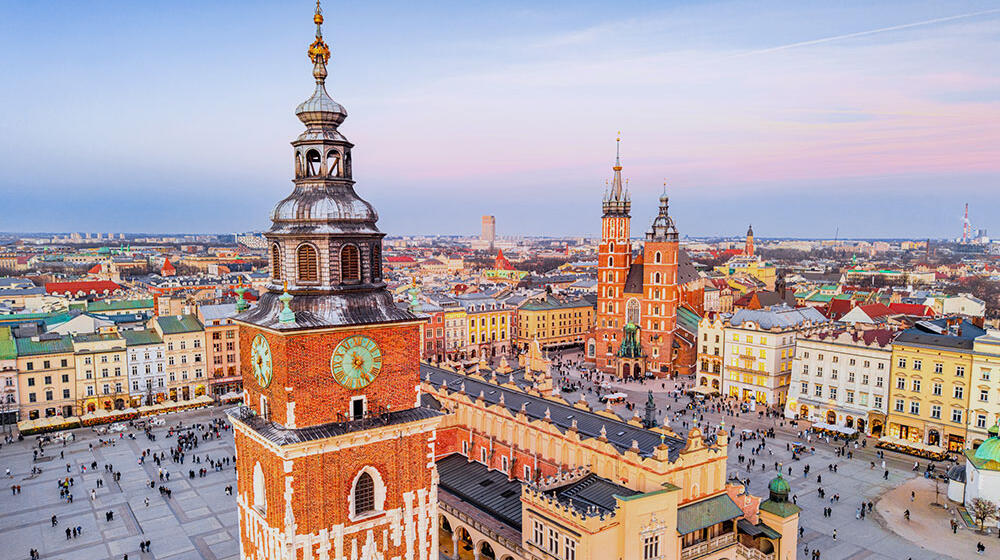
Poland is always worth a visit. This Central European country offers suitable destinations for every type of holiday: from a city break in Warsaw or Krakow, to a beach holiday on the Baltic Sea, an active holiday or a relaxing break in the Tatra Mountains. Poland is diverse and easy to reach from Austria. In this article, you will discover what else makes Poland an attractive destination and how to prepare properly for your trip. Here you will find answers to questions such as: Is an identity card sufficient for entry? What happens if you need medical assistance while travelling? What speed limits apply on the roads? When is the best time to visit?
If you like to plan everything carefully, you will find the most important travel information about Poland gathered here for reliable trip planning. This way, you will know before departure which documents to pack in your hand luggage, which information to check again shortly before your trip and whom to contact in an emergency. This gives you peace of mind and leaves more room to look forward to your holiday.
The most important information at a glance
- Do I need a visa for Poland? No. Austrian citizens only need a valid identity card or passport.
- Is Poland generally safe? The Austrian Foreign Ministry classifies Poland as security level 1. Normal precautions are still advisable in cities and on public transport.
- Is the e-card valid? The EHIC on the back of the e-card gives access to necessary medical treatment within the public healthcare system, but it does not replace private travel insurance.
- Can I pay in euros everywhere? No. The local currency is the złoty (PLN). Card payments are widely accepted, but carrying some cash is recommended.
- What is particularly important when driving? Daytime lights are mandatory and the alcohol limit is 0.2 per mille. Check route-specific tolls and local low-emission zones in advance.
What should you prepare before your holiday in Poland?
To enter Poland, Austrian citizens need either a valid identity card or a passport. However, a visa is not required. Before departure, check that your travel document is valid for the entire duration of your stay in Poland. Children travelling with you also need their own passport. For minors travelling alone or travelling with only one parent or legal guardian, written authorisation is required, together with the child's birth certificate, contact details and, where applicable, proof of custody.
Checklist before departure
- Check the validity of the identity cards or passports of everyone travelling.
- If necessary, prepare a travel authorisation and include copies of the birth certificate and passports of the legal guardians.
- Check that the European Health Insurance Card (EHIC) on the back of your e-card is valid.
- Save booking confirmations, insurance documents and emergency contacts offline.
- Travelling by car: pack your driving licence, vehicle registration certificate part I and International Motor Insurance Card.
- Check the latest travel advice from the Foreign Ministry (BMEIA) 48 hours before departure.
Is Poland a safe travel destination?
According to the Austrian Foreign Ministry, Poland has a good level of security (security level 1). However, pickpocketing can occur in Warsaw, Krakow, at railway stations and on public transport. Therefore, do not keep your identity document, payment card and cash together. When using taxis, use official apps where possible or agree on the fare in advance to avoid excessive charges. In bars or clubs, keep an eye on your drink to protect yourself against drink spiking, especially if you are travelling alone. Keep your distance from demonstrations and large crowds if the situation is unclear. In border areas with Belarus, Russia and Ukraine, restrictions may be introduced at short notice. Before travelling to these regions, check the latest information from official sources. When taking photographs, also pay attention to prohibition signs displayed at military or strategically important facilities.
Which emergency numbers should you save?
In an acute emergency, call 112 first. This Europe-wide number connects you with the appropriate emergency services.
You should also save the following important telephone numbers for your trip to Poland:
- (+48) 997: Police
- (+48) 998: Fire brigade
- (+48) 999: Ambulance service
- (+48) 22 841 00 81: Austrian Embassy in Warsaw
- (+43) 1 50 444 00: Emergency number of Europäische Reiseversicherung (or your travel insurance provider)
- Your bank's emergency number for blocking payment cards and online banking
How does medical care work?
Poland's healthcare system is good, but does not meet the same standards as Austria's. With the European Health Insurance Card (EHIC) on the back of your e-card, you have access to medically necessary treatment within Poland's public healthcare system during your holiday. The same conditions apply to you as to people insured in Poland. This means that you may have to pay part of the cost of private medical treatment. Services such as rescue operations or repatriation are also not covered by the EHIC. The European Health Insurance Card therefore only provides basic cover and does not replace travel insurance.
To ensure comprehensive protection in the event of illness or an accident in Poland, we therefore recommend taking out international travel health insurance that also covers private healthcare services, rescue operations and repatriation. Our annual CompleteCover offers exactly that and much more. It provides comprehensive health and financial protection, allowing you to travel worry-free throughout the year.
Discover annual CompleteCover now
What should you include in your travel first-aid kit?
A small, well-organised travel first-aid kit can save you time in an emergency. Pack a sufficient supply of your personal medication, including a reserve. For prescription medication, we also recommend carrying a doctor's certificate, especially for larger quantities or medication that needs to be kept refrigerated.
Also include:
- Painkillers and fever-reducing medication
- Plasters
- Disinfectant
- Medication for gastrointestinal problems
- Sun and insect protection
- If necessary: a cool bag for medication
What applies when travelling by car?
To enter Poland by car, you need your valid Austrian driving licence, which is recognised in Poland, as well as your vehicle registration certificate part I and proof of insurance.
Important traffic regulations:
- Daytime lights: Dipped headlights or daytime running lights must be switched on during the day.
- Alcohol limit: 0.2 per mille. If possible, avoid alcohol altogether before driving.
- Warning triangle: Carrying a warning triangle is mandatory.
- High-visibility vest requirement: In the event of a breakdown or accident, anyone leaving the vehicle must wear a high-visibility vest.
- Winter tyres: Not mandatory, but strongly recommended in snow and icy conditions.
Speed limits for cars in Poland:
- Built-up areas: 50 km/h
- Outside built-up areas (country roads): 90 km/h
- Expressways: 100 km/h or 120 km/h
- Motorways: 140 km/h
How do tolls and low-emission zones work?
There is no nationwide vignette for cars weighing up to 3.5 tonnes in Poland. Instead, tolls are charged on specific sections of road. These mainly include privately operated sections of the A1, A2 and A4 motorways. Check your specific route shortly before departure for toll sections, as operators and payment methods can vary.
Also pay attention to vehicle-specific access rules for so-called clean transport zones (Strefa Czystego Transportu – SCT) in Warsaw and Krakow. Vehicles with foreign number plates may need to be registered with details of their emissions standard. You can find the current rules for low-emission zones on the official websites of the cities of Krakow and Warsaw.
Our tip: Do not rely solely on your navigation system for information about speed limits, tolls and low-emission zones, as this information may be outdated. Pay particular attention to road signs instead.
What is the best way to pay in Poland?
Poland's national currency is the złoty (PLN), not the euro. In cities, hotels, restaurants and petrol stations, card payments are generally accepted. For markets, smaller restaurants, parking meters and rural areas, however, it is advisable to carry cash. When withdrawing money from an ATM, we recommend choosing złoty as the currency and declining conversion into euros. Dynamic currency conversion can be more expensive. Preferably use ATMs operated by established banks and check any applicable fees before withdrawing money.
Our tip: Pack a second payment card and keep it separate from your other means of payment.
When is the best time to visit Poland?
For a tour of Poland or a city break, May, June and September are particularly pleasant months. In summer, the Baltic coast, Masuria and the Tatra Mountains are particularly popular destinations. Accommodation and popular train or flight connections should therefore be booked early. Spring and autumn are ideal for sightseeing away from the tourist crowds, but the changeable weather means you should pack versatile, weatherproof clothing. In winter, Christmas markets and winter sports around Zakopane attract visitors. Weather conditions vary considerably between the Baltic coast, the interior of the country and the mountain regions, so the regional weather forecast shortly before departure is more important for your travel planning than a nationwide average.
Which Polish regions are right for your trip?
Get inspired when planning your trip: the following Polish destinations are particularly worth seeing and popular, with recommendations on the types of trips they are best suited for and practical planning tips.
- Destination: Krakow
Suitable for: Culture, old town, Kazimierz, excursion to Wieliczka
Planning tip: Book time slots for popular attractions in advance. Check low-emission zones beforehand.
- Destination: Warsaw
Suitable for: History, museums, modern architecture Planning tip: Use public transport; pay attention to major events and current information.
- Destination: Gdansk and the Baltic Sea
Suitable for: Maritime atmosphere, beaches, the Tri-City Planning tip: Book early in July and August; pack windproof and waterproof clothing.
- Destination: Masuria
Suitable for: Lakes, nature, boating holidays Planning tip: Book accommodation and boats during the high season; carry cash.
- Destination: Tatra Mountains and Zakopane
Suitable for: Hiking, mountain scenery, winter sports Planning tip: Check the weather, trail conditions and appropriate equipment before every outing.
- Destination: Wroclaw
Suitable for: City breaks, market square, Oder islands Planning tip: Ideal for a long weekend; the old town is easy to explore on foot.
Our tip: Looking for more ideas? In this guide, we show you how to use artificial intelligence to put together your own personalised trip and plan it smartly.
Which Polish specialities should you try?
Polish cuisine is hearty, regional and often surprisingly varied. In larger cities, you will find plenty of vegetarian options. If you have allergies or intolerances, ask specifically about broths, fillings and side dishes, as dishes that appear to be meat-free may contain animal-derived ingredients.
Typical Polish dishes
- Pierogi: filled dumplings (e.g. with meat, potatoes, cabbage or fruit)
- Żurek: sour rye soup with sausage and egg
- Barszcz: beetroot soup
- Bigos: stew made with cabbage, mushrooms and usually meat
- Placki ziemniaczane: crispy potato pancakes
How much should you tip in Poland?
Tipping is voluntary in Poland. In restaurants, a tip of around 5 to 10 percent is customary for good service. In cafés, bars and taxis, you can round up to a suitable amount. You can find more tips on the appropriate amount and how to give a tip in our tipping etiquette guide.
Which Polish words are useful when travelling?
These words are particularly useful during your holiday in Poland:
- Dzień dobry - Hello / Good day
- Dziękuję - Thank you
- Proszę - Please
- Przepraszam - Excuse me / Sorry
- Ile to kosztuje? - How much does it cost?
- Gdzie jest apteka? - Where is the pharmacy?
- Pomocy! - Help!
- Nie mówię po polsku - I don't speak Polish
Our tip: Save the addresses of your hotel, railway station and medical facilities in Polish as well. This can help in taxis, on buses and in emergencies, particularly outside tourist centers.
Conclusion: Travel to Poland safely and well prepared
A holiday in Poland can be reliably prepared in just a few simple steps. To prevent unexpected incidents from disrupting your travel plans, we recommend taking out travel insurance. Our annual comprehensive cover protects you against travel risks throughout the year. It covers the costs and provides assistance if you need medical treatment or repatriation. You are also covered for trip cancellation, trip interruption and lost luggage. This allows you to travel worry-free, knowing that you are well prepared and fully protected.
FAQ - Frequently asked questions about holidays in Poland
Can I travel to Poland with an identity card?
Yes. Austrian citizens can enter with a valid identity card or passport.
Do I need a visa for Poland?
Austrian citizens do not need a visa for tourist trips. Different rules may apply to other nationalities or for specific purposes of stay.
Can I pay in euros in Poland?
The euro is not legal tender in Poland. Some businesses may accept it, but paying in złoty or by card is generally cheaper and more transparent.
Does the e-card cover medical treatment in Poland?
The EHIC on the back of the e-card covers medically necessary services within the public healthcare system under Polish conditions. However, private treatment and repatriation are not covered.
Which emergency number should I call in Poland?
Call 112. This number is valid throughout the EU and connects you with the appropriate emergency services.
Do I need a travel adapter in Poland?
Usually not. Poland uses type C and E sockets with 230 volts and 50 hertz. Most Austrian plugs and chargers are compatible.
Is there a time difference between Austria and Poland?
No. Poland and Austria are in the same time zone and switch to summer and winter time at the same time. There is therefore no need to adjust clocks or travel plans.
Can you drink tap water in Poland?
Tap water generally meets applicable European quality standards and is usually safe to drink, particularly in larger cities. Taste and quality may vary depending on the building and the condition of the pipes. If in doubt, use bottled water.
Are shops open on Sundays in Poland?
Only to a limited extent. Legal restrictions on retail opening apply on many Sundays. Exceptions include petrol stations, pharmacies and shops at railway stations and airports.
From our travel magazine
Backpacking: how to make your backpacking trip safe and relaxed
Better not travel without travel insurance!
Why do I need annual travel insurance?